 IDA Pacific
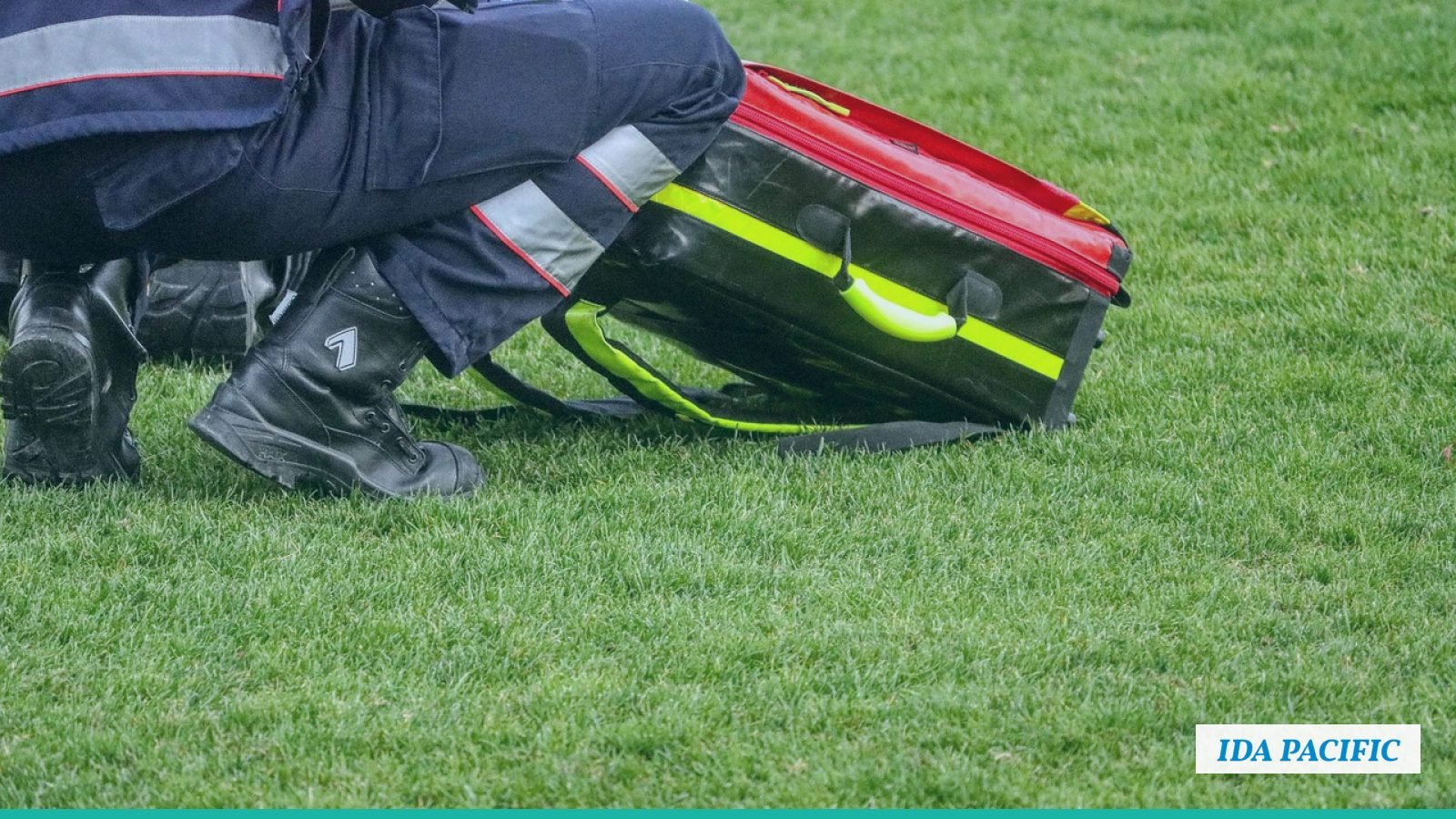
A basic first aid kit list is the foundation of every safe workplace, school, vessel and outreach programme across the Pacific Islands. This guide organises the essentials into clear categories so buyers can build, audit and reorder kits consistently, whether you manage one site in Port Vila or twenty across several provinces. If you prefer ready-assembled options, browse our first aid kits range and compare them against the list below.
Rather than repeating generic advice, this article takes a category-based approach: wound care, dressings, instruments, protection, cleansing, support and documentation. Each category explains what to include, why it matters in tropical conditions, and how to scale quantities.
Why a Category-Based Basic First Aid Kit List Works Better
Most kits fail not because items were never bought, but because nobody can tell at a glance what is missing. Grouping contents by function makes audits faster and reduces the risk of a kit containing forty plasters but no gloves.
A category structure also helps procurement teams. When each category has a minimum count, reorders become a simple comparison rather than a guess. This matters in island settings where the next delivery may depend on shipping schedules or inter-island flights.
- Faster audits: staff check seven categories, not thirty loose items.
- Consistent standards: every site in a network carries the same baseline.
- Easier training: first aiders learn where things are by function.
- Cleaner budgeting: consumables and reusables are tracked separately.
The Complete Basic First Aid Kit List: 30 Items by Category
The table below sets out a practical baseline for a small workplace or classroom kit serving roughly ten to twenty-five people. Larger or higher-risk sites should scale up, as explained later. Always check local regulations or programme requirements, which may set specific minimums.
| Category | Item | Typical baseline |
|---|---|---|
| Wound care | Assorted adhesive plasters | 1 box of mixed sizes |
| Wound care | Waterproof plasters | 1 small pack |
| Wound care | Sterile wound closure strips | 1 pack |
| Wound care | Blister dressings | 1 small pack |
| Dressings | Sterile gauze swabs | Several sealed packs |
| Dressings | Non-adherent wound pads | Several, mixed sizes |
| Dressings | Medium and large sterile wound dressings | 2-4 of each |
| Dressings | Sterile eye pads | 2 |
| Bandages | Conforming roller bandages | 2-3 widths |
| Bandages | Crepe or elastic bandages | 2 |
| Bandages | Triangular bandages | 2 |
| Bandages | Tubular bandage | 1 roll or pack |
| Fixation | Medical adhesive tape | 1-2 rolls |
| Fixation | Safety pins | 1 small pack |
| Instruments | Bandage scissors (blunt tip) | 1 pair |
| Instruments | Tweezers | 1 pair |
| Instruments | Disposable thermometer or digital thermometer | 1 |
| Instruments | Penlight or small torch | 1 |
| Protection | Disposable nitrile gloves | Several pairs, two sizes |
| Protection | CPR face shield or pocket mask | 1 |
| Protection | Face masks | A few |
| Protection | Clinical waste bags | 2-3 |
| Cleansing | Sterile saline pods or eye wash | Several |
| Cleansing | Alcohol-free cleansing wipes | 1 pack |
| Cleansing | Hand sanitiser | 1 bottle |
| Support | Instant cold packs | 1-2 |
| Support | Foil emergency blanket | 1-2 |
| Support | Finger splint or malleable splint | 1 |
| Documentation | Incident record forms and pen | 1 pad |
| Documentation | Contents checklist and emergency numbers card | 1 |
Note that this basic first aid kit list deliberately excludes medicines. Whether any medicines belong in a kit depends on your organisation’s policies, trained personnel and local rules, so decisions should be made with qualified health staff.
Category 1: Wound Care and Dressings
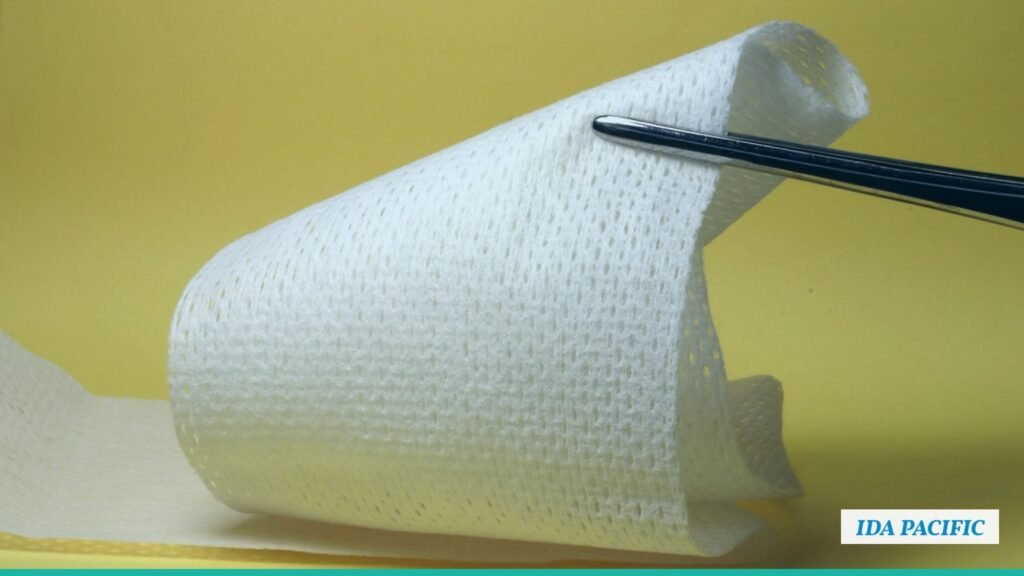
Cuts, grazes and coral scrapes are among the most common minor injuries in coastal Pacific communities. Wound care items are therefore the most heavily used part of any kit and the first to run out.
What to prioritise
- Individually wrapped sterile items. Humidity degrades opened packs quickly.
- Non-adherent pads for grazes, so dressings can be changed without disturbing healing tissue.
- Waterproof plasters for outdoor, marine and agricultural workers.
- A range of sizes, as a single size rarely fits real injuries.
Tropical tip
Adhesives weaken in heat and humidity. Store spare plasters and tape in sealed zip bags or airtight containers, and rotate stock so older packs are used first. Inspect adhesive items at every audit, not only expiry dates.
Category 2: Bandages and Fixation
Bandages hold dressings in place, provide support and help immobilise minor injuries until professional care is available. A balanced selection covers most situations without overloading the kit.
- Conforming bandages mould around joints and hold dressings securely.
- Crepe or elastic bandages provide light support for sprains.
- Triangular bandages double as slings or improvised padding.
- Tape and safety pins secure everything in place.
Keep at least two of each key bandage so a single incident does not empty the kit. For remote sites where evacuation could take hours, consider doubling these quantities.
Category 3: Instruments and Basic Equipment
Instruments are reusable, so they are easy to overlook during audits. Yet a missing pair of scissors can make every dressing harder to apply. Choose durable, rust-resistant options suited to salty, humid air.
Blunt-tip bandage scissors, fine tweezers for splinters or debris, a thermometer and a small torch form a sensible core. Clinics and larger workplaces can extend this with items from our medical equipment catalogue, such as blood pressure monitors or pulse oximeters, where trained staff will use them.
Care and cleaning
- Clean and dry instruments after every use to prevent corrosion.
- Store them in a small pouch so they are easy to locate.
- Check battery-powered items monthly; replace batteries before they leak.
Category 4: Personal Protection and Infection Control
Protecting the first aider is as important as treating the casualty. Gloves, a CPR barrier and waste bags reduce exposure to blood and body fluids, and they reassure staff who may otherwise hesitate to help.
Nitrile gloves are a practical default because they avoid latex allergy concerns. Stock at least two sizes. In hot climates, gloves can become brittle if stored in direct sun, so keep kits away from windows, vehicle dashboards and metal roofs. The World Health Organization publishes extensive infection prevention guidance that supports these basics.
Category 5: Cleansing, Support and Comfort
Cleansing items prepare wounds and flush eyes, while support items help manage swelling, shock and minor fractures until help arrives.
- Sterile saline pods are single-use, so no contamination risk from reused bottles.
- Cleansing wipes clean skin around a wound.
- Instant cold packs help with bumps and sprains where no freezer is available, which is common on outer islands.
- Foil blankets help keep a casualty warm, which still matters after immersion or during wet weather.
- Splints provide temporary immobilisation.
Category 6: Documentation and Information
Paperwork is the most neglected part of a kit, but it drives safety improvement. Incident forms record what happened and which items were used, which feeds directly into restocking.
Include a laminated contents list so anyone can audit the kit, plus a card with local emergency contacts, the nearest health facility and evacuation arrangements. In multilingual settings, consider versions in Bislama, Pijin, Tok Pisin or other local languages alongside English.
Scaling Your Basic First Aid Kit List by Site Type
One list does not fit every location. Use the baseline above, then adjust for headcount, risk level and distance from medical care.
| Site type | Key adjustments | Restock rhythm |
|---|---|---|
| Office or shop | Baseline list; one kit per floor or area | Quarterly check |
| School | Extra plasters, cold packs, incident forms; trip kits | Each term |
| Construction or agriculture | More dressings, eye wash, large bandages, splints | Monthly check |
| Vessel or dive operation | Waterproof storage, more foil blankets, waterproof plasters | Before each voyage |
| Remote outreach team | Doubled quantities, compact rugged bags | Before each trip |
| Clinic or aid post | Bulk consumables plus equipment and essential medicines | Linked to stock system |
Decision criteria for quantities
- Headcount: more people means more consumables per category.
- Hazards: machinery, tools, boats and heat increase dressing and eye wash needs.
- Distance to care: the longer the evacuation time, the more self-sufficient a kit must be.
- Resupply lead time: islands with infrequent shipping need larger buffers.
- Trained responders: extended items only make sense if someone can use them.
For clinics and health programmes, first aid supplies usually sit alongside a wider formulary. Many Pacific ministries align their lists with the WHO Model Lists of Essential Medicines, and our essential medicines range supports those needs for approved trade customers.
How to Audit a Kit Against Your Basic First Aid Kit List
A list only works when someone uses it. Set a simple routine and assign a named person per kit.
- Open and empty the kit onto a clean surface.
- Check each category against the laminated contents list.
- Inspect condition: damaged packaging, moisture, rust, brittle gloves or weak adhesive.
- Check expiry dates on sterile items, saline and cold packs.
- Record shortfalls on a restock sheet.
- Repack logically with categories grouped together.
- Sign and date the audit record and seal the kit.
Tamper seals help supervisors see at a glance whether a kit has been opened since its last check.
Cost Factors to Consider
Kit costs vary widely, so it helps to understand what drives them rather than focusing only on the headline price.
- Container quality: waterproof, impact-resistant cases cost more but protect contents in boats and vehicles.
- Sterile packaging: individually wrapped items cost more per unit but reduce waste in humid climates.
- Quantity scaling: buying consumables in bulk for multiple sites usually lowers unit costs.
- Freight and lead times: sourcing from within the region can reduce delays and shipping complexity.
- Wastage: poor storage leads to frequent replacement, which raises long-term cost.
IDA Pacific holds stock in its own Port Vila warehouse for short lead times and has supplied the Pacific for 16 years, serving 13 countries. Wholesale prices are shown only to approved trade customers, and our supply chain is certified for GMP, GDP and ISO 9001; read more on our quality guarantee page.
Common Mistakes to Avoid
- Buying once and forgetting: kits deplete quietly without audits.
- Ignoring climate: heat and humidity shorten the useful life of many items.
- Overstocking one category: lots of plasters but no gloves is a common pattern.
- No documentation: without incident records, restocking becomes guesswork.
- Adding items nobody is trained to use: keep kits matched to responder skills.
Conclusion
A clear, category-based basic first aid kit list makes kits easier to build, audit and restock, and it helps every site in your network meet the same standard. Start with the 30-item baseline, scale it by site type and risk, and protect your stock from Pacific heat and humidity.
Explore our first aid kits or the full product catalogue, then open a trade account to see wholesale pricing and order from our Port Vila warehouse.
Frequently asked questions
What should be on a basic first aid kit list for a small workplace?
A small workplace kit should cover wound care, dressings, bandages, fixation tape, basic instruments, gloves and a CPR barrier, cleansing items such as saline, support items like cold packs and foil blankets, and documentation. Grouping items into categories makes audits quicker. Adjust quantities based on headcount, hazards and how far your site is from the nearest health facility.
How often should a first aid kit be checked?
Low-risk sites such as offices typically check quarterly, while construction, agriculture and marine operations benefit from monthly or pre-trip checks. Kits should also be checked after every incident. In humid Pacific conditions, inspect adhesives, gloves and packaging condition, not only expiry dates, because heat and moisture can damage items before they expire.
Should medicines be included in a basic first aid kit?
This depends on your organisation's policies, local regulations and whether trained health staff are available. Many workplace kits contain no medicines at all. Clinics and health programmes usually manage medicines separately through their formulary and stock systems. Decisions about including any medicines should be made with qualified health professionals rather than by default.
How do I protect first aid supplies from tropical humidity?
Choose individually wrapped sterile items, store spares in sealed bags or airtight containers, and keep kits out of direct sun, vehicles and hot metal-roofed rooms. Rotate stock so older items are used first. Waterproof cases are worth considering for boats, vehicles and outdoor sites where rain and salt spray are common.
Can IDA Pacific supply first aid kits to other Pacific countries?
Yes. IDA Pacific supplies 13 countries across the Pacific from its own Port Vila warehouse, helping keep lead times short. Pharmacies, clinics, hospitals, NGOs and health programmes can open a trade account to view wholesale prices, which are shown only to approved trade customers, and order first aid kits and related supplies.