 IDA Pacific
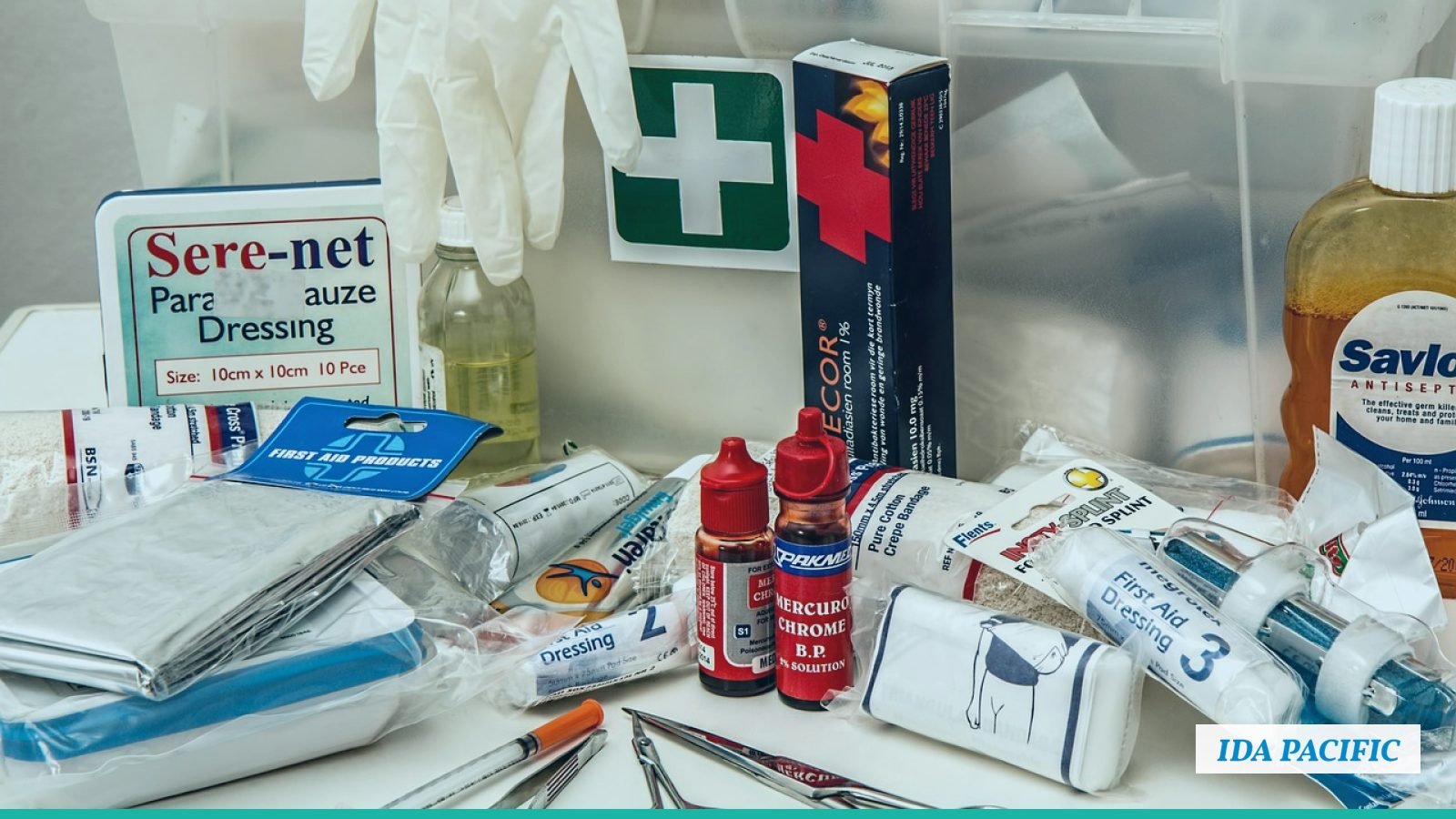
Bandage scissors Lister pattern instruments are among the most-used tools in any dressing room, ward or first aid post, yet they are often bought as an afterthought. This guide explains what makes the Lister design different, how to judge quality, and how Pacific health facilities can keep the right number on the shelf. You can browse related instruments in our surgical supplies range as you read.
IDA Pacific has supplied the Pacific for 16 years from its own Port Vila warehouse, serving 13 countries. The advice below draws on the practical questions buyers in Vanuatu, Solomon Islands, Papua New Guinea and Fiji raise when ordering basic instruments.
What Are Bandage Scissors Lister Pattern?
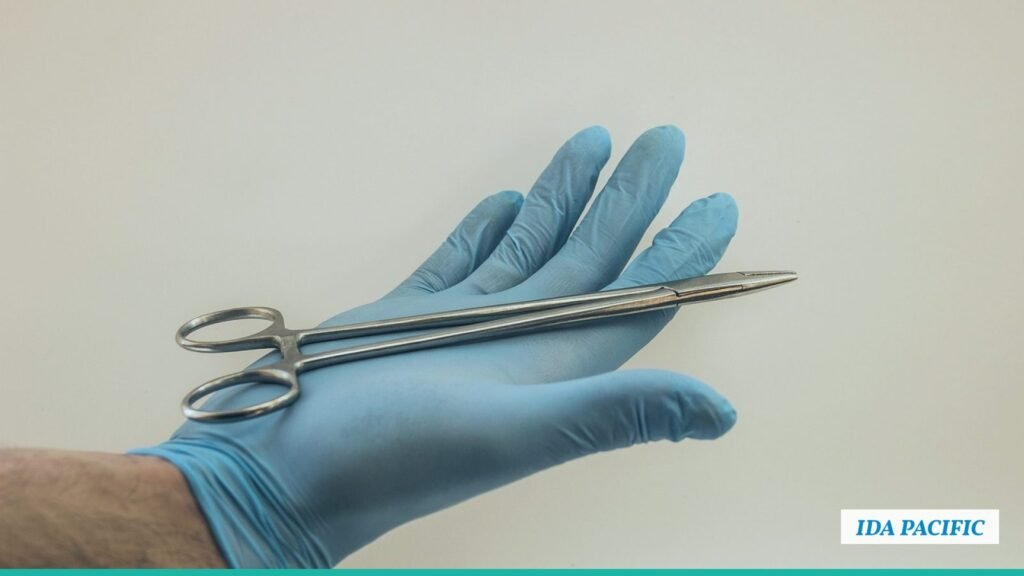
Lister bandage scissors are named after Joseph Lister, the surgeon who championed antiseptic practice. Their defining feature is an angled blade set: the handles sit at roughly a 45-degree bend to the blades, so the user can cut along a limb without lifting the dressing far from the skin.
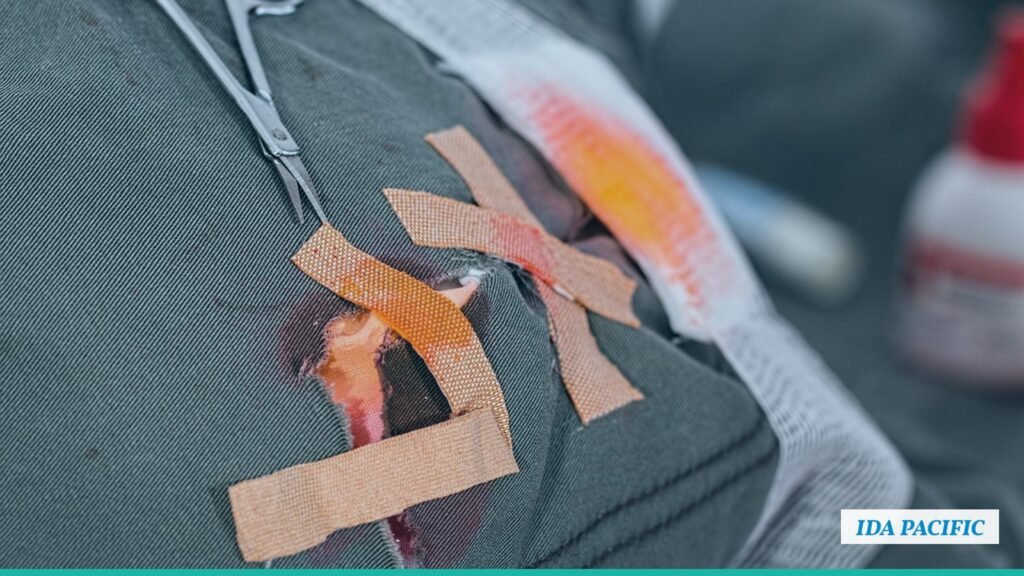
The lower blade ends in a flattened, blunt probe tip. That tip slides under bandages, gauze and tape and lifts the material away from the patient as the upper blade cuts. The result is a safer cut with far less risk of nicking skin, especially on swollen, fragile or elderly patients.
Key design features
- Angled shanks: keep the hand clear of the patient and give a good sight line.
- Blunt probe tip: protects skin when sliding beneath dressings.
- Ring handles: usually symmetrical, suitable for left or right hand use with some practice.
- Box or screw joint: holds the blades in alignment for a clean cut.
Where they are used
You will find these scissors in emergency departments, outpatient dressing clinics, community health posts, school and workplace first aid rooms, and in ambulance or outreach kits. They cut crepe, cohesive and gauze bandages, adhesive tape, plaster padding and light clothing.
Bandage Scissors Lister Sizes: Choosing the Right Length
Lister scissors are generally sold by overall length. The most common sizes are around 14 cm, 18 cm and 20 cm, with some ranges offering longer patterns for heavy casts and padding.
| Approximate length | Best suited to | Typical setting |
|---|---|---|
| 14 cm (5.5 in) | Fine dressings, tape, paediatric care | Pharmacy counters, first aid kits, nurse pockets |
| 18 cm (7 in) | General bandaging, most daily dressing work | Wards, clinics, health centres |
| 20 cm (8 in) | Thick padding, layered bandages, clothing | Emergency, orthopaedic and trauma areas |
For most rural health centres, the 18 cm size is the workhorse. A smaller pair fits pocket and kit storage, while a larger pair helps when removing heavy bandaging after a fracture or burn dressing.
Matching size to the user
Hand size matters more than many buyers expect. Staff with smaller hands may find long scissors tiring, while larger hands may struggle with tight finger rings. If possible, trial a sample before placing a large order.
Reusable vs Disposable Lister Scissors
The biggest purchasing decision is whether to buy reusable stainless steel scissors or single-use versions. Each has a place, and many facilities stock both.
| Factor | Reusable stainless steel | Single-use / disposable |
|---|---|---|
| Upfront cost | Higher per unit | Lower per unit |
| Lifetime cost | Low if reprocessed well | Ongoing, rises with volume |
| Infection control | Depends on reliable cleaning and sterilisation | No reprocessing needed; discard after use |
| Cutting performance | Strong, consistent, can be sharpened | Adequate for light dressings, may struggle with thick layers |
| Storage and freight | Small volume, long life | More volume and frequent reorders |
| Waste | Minimal | Adds to clinical waste stream |
When reusable makes sense
Hospitals and larger clinics with a working autoclave and trained staff usually get the best value from reusable bandage scissors lister instruments. A good pair can last years if cleaned promptly and stored dry.
When disposable makes sense
Outreach programmes, disaster response kits, and sites without reliable sterilisation often prefer single-use scissors. They are also useful for isolation areas where cross-contamination risk is high.
How to Judge Quality in Bandage Scissors Lister Instruments
Not all scissors that look alike perform alike. Poor steel dulls quickly, rusts in humid island conditions and develops loose joints. Use these checks when assessing samples.
- Steel grade: look for surgical stainless steel suitable for repeated autoclaving. Ask for the material specification.
- Finish: satin or matte finishes reduce glare under lights; mirror finishes are easier to inspect for residue. Both are acceptable.
- Joint action: the blades should open and close smoothly without grinding or side play.
- Cut test: the scissors should cut cleanly through several layers of gauze along the full blade length, not just at the tip.
- Probe tip: the blunt tip should be smooth and rounded with no burrs that could snag skin.
- Markings: reputable instruments carry identification marks for traceability.
- Packaging and documentation: clear labelling and lot details support inventory control.
Buying through a supply chain certified for GMP, GDP and ISO 9001 helps ensure products are handled and stored correctly. Read more about how we manage this on our quality guarantee page.
Pacific climate considerations
High humidity and salt air accelerate corrosion. Even good stainless steel can stain if left wet. Choose instruments with a reliable passivated finish, dry them thoroughly after cleaning, and store them in closed, ventilated containers rather than open trays.
Using Lister Scissors Safely
Correct technique protects both the patient and the instrument. The following general steps reflect common clinical practice; always follow your facility’s own protocols.
- Explain the procedure to the patient and position the limb so the dressing is accessible.
- Slide the blunt probe tip under the bandage, keeping it flat against the skin.
- Cut along the side of the limb, away from wounds, bony prominences and tubes or drains.
- Lift the dressing gently as you cut rather than pulling it towards you.
- Use the scissors only for dressings and soft materials, never for wire, plaster casts or hard plastics.
Using bandage scissors for the wrong job is the fastest way to ruin them. Keep separate utility scissors for packaging, cable ties and general tasks.
Cleaning, Sterilising and Maintaining Reusable Scissors
Reusable instruments are only cost-effective if reprocessing is done well. A simple routine extends life and supports infection prevention, in line with guidance promoted by the World Health Organization on safe health care practice.

A practical reprocessing routine
- Point-of-use care: wipe off gross soil and keep instruments moist until cleaning to stop residue drying in the joint.
- Clean: open the scissors fully and clean blades, joint and rings with a neutral or enzymatic detergent and a soft brush.
- Rinse: rinse thoroughly, ideally with treated or distilled water to limit mineral spotting.
- Dry: dry completely, paying attention to the joint.
- Inspect: check for stains, cracks, blunt edges or loose joints. Remove damaged items from use.
- Lubricate: apply instrument-grade lubricant to the joint where your protocol allows.
- Package and sterilise: sterilise using your validated method, with scissors in the open or unlocked position.
- Store: keep in a clean, dry, closed area until use.
Signs it is time to replace
Replace scissors that chew rather than cut, show pitting or rust that does not clean off, have a bent probe tip, or wobble at the joint. Sharpening services are rare on smaller islands, so budgeting for regular replacement is usually more realistic than repair.
How Many Bandage Scissors Lister Pairs Should You Stock?
Stock levels depend on patient volume, how many dressing areas you run and your reprocessing turnaround. A shortage often appears when scissors are tied up in sterilisation or wander out of the room in staff pockets.
A simple planning approach
- Count dressing points: each trolley, treatment room and kit needs its own pair.
- Add the reprocessing cycle: if a pair is out of service for a day while being sterilised, you need at least one spare per point.
- Allow for loss: scissors go missing. Add a buffer, especially for high-traffic emergency areas.
- Plan for outreach: village visits and school programmes need their own kits, often with disposable scissors.
- Review quarterly: track losses and damage, and adjust your reorder point.
Remember that shipping between islands can be unpredictable during cyclone season. Holding a slightly larger buffer before November to April reduces the risk of running out when freight is disrupted. IDA Pacific holds stock in Port Vila to keep lead times short, but local buffers still matter.
Building complete kits
Scissors are one part of a dressing set. Many facilities pair them with forceps, gauze, tapes and antiseptics. If you are assembling kits for workplaces or outreach teams, see our ready-made first aid kits, and our wider product catalogue for consumables.
Cost Factors to Consider
We do not quote prices here, and wholesale prices are shown only to approved trade customers. However, these factors drive the real cost of bandage scissors lister instruments over time:
- Material and finish: higher-grade steel costs more upfront but lasts longer.
- Size: longer patterns typically cost slightly more.
- Reusable vs disposable: compare cost per use, not unit price.
- Reprocessing: include detergent, water, energy, packaging and staff time.
- Losses: missing instruments are a hidden recurring cost.
- Freight: consolidating orders with other supplies reduces per-item shipping.
For NGOs and health programmes, aligning instrument purchases with essential medicine orders can simplify procurement. The WHO Essential Medicines Lists are a useful reference when planning the wider supply list.
Conclusion
The right bandage scissors lister instruments make dressing changes safer, quicker and kinder for patients. Choose the size that suits your work, decide where reusable and disposable options fit, check quality carefully, and protect your investment with good reprocessing and sensible stock levels for island logistics.
Explore our surgical supplies to find Lister scissors and related instruments. To see trade pricing and order directly from our Port Vila warehouse, open a trade account today.
Frequently asked questions
What is the difference between Lister scissors and ordinary scissors?
Lister bandage scissors have angled handles and a blunt, flattened probe tip on the lower blade. The tip slides under dressings and lifts them away from the skin while the upper blade cuts, reducing the risk of injury. Ordinary scissors have straight, pointed blades that are not designed for safe cutting close to a patient's body.
Can Lister bandage scissors be autoclaved?
Reusable Lister scissors made from surgical stainless steel are generally designed for repeated steam sterilisation. Clean and dry them thoroughly first and sterilise them in the open position. Always follow the manufacturer's instructions and your facility's validated sterilisation protocol. Disposable versions are intended for single use and should not be reprocessed.
Which size of Lister scissors is best for a rural health centre?
The 18 cm length suits most general dressing work and is a common choice for health centres. Many facilities also keep a smaller 14 cm pair for kits and fine dressings, and a 20 cm pair for heavy padding. Hand size and the type of bandaging you do most often should guide the final mix.
Are left-handed Lister scissors available?
Most Lister scissors have symmetrical ring handles, so left-handed users can operate them, although the blade orientation still favours the right hand. Some ranges offer true left-handed versions. If several staff are left-handed, ask your supplier about availability and consider trialling samples before ordering in volume.
How do I stop scissors rusting in a humid climate?
Dry instruments completely after cleaning, especially around the joint, and rinse with treated or distilled water where possible to avoid mineral deposits. Store them in closed, ventilated containers rather than open trays, apply instrument lubricant as your protocol allows, and remove any pitted or stained scissors from service promptly.