 IDA Pacific
Knowing the 10 items in first aid box kits that do most of the real work helps pharmacies, clinics, schools and employers across the Pacific spend wisely and respond well. Rather than another long checklist, this guide focuses on the core ten: why each earns its place, what separates a good product from a poor one, and how island conditions affect selection. If you already know what you need, browse our range of first aid kits for Pacific workplaces and communities.
This article is general guidance for buyers and health professionals. It does not replace clinical training, local regulations or advice from your health authority on treatment.
Why Focus on the 10 Items in First Aid Box Kits?
Most minor injuries at work, school or home fall into a handful of categories: cuts and grazes, burns, sprains, splinters, bleeding and eye irritation. A small set of well-chosen items covers the large majority of these events. When the core is solid, everything else is an add-on for specific risks.
Focusing on the core ten also makes restocking predictable. Staff learn what each item is for, used items get replaced, and nothing important sits buried under rarely used extras. For remote sites in Vanuatu, the Solomon Islands, Papua New Guinea or Fiji, a lean and well-understood box is often more useful than a bulky one nobody checks.
- Faster response: fewer items means staff find what they need quickly.
- Easier audits: a short core list is simple to check monthly.
- Better budgeting: you buy quality where it counts instead of quantity everywhere.
The Core 10 Items in First Aid Box Kits Explained
Below are the ten items most first aid guidance agrees on, in the order most staff will reach for them. For each, we note what it does and what to look for when buying first aid supplies in bulk.
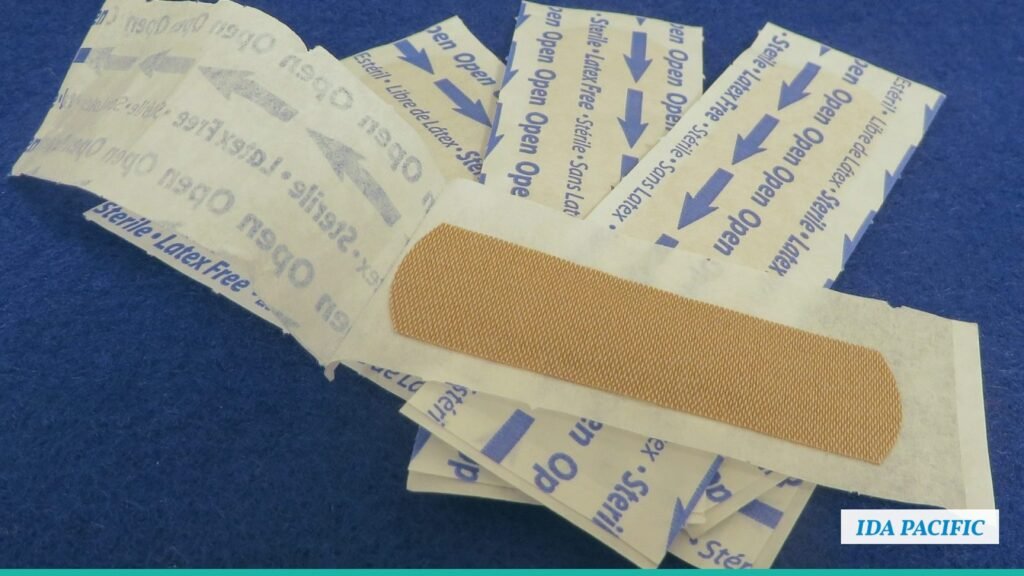
1. Adhesive dressings (plasters) in assorted sizes
Plasters are the most used item in nearly every box. They cover small cuts and grazes and keep dirt out. Choose an assortment of sizes, plus some fabric versions that flex on fingers and knuckles.
In humid Pacific conditions, adhesive quality matters. Cheap plasters can lose grip within hours on sweaty skin. Look for individually sealed, sterile packs and check the backing does not stick together after storage in heat.
2. Sterile wound dressings
Medium and large sterile dressings with an attached bandage handle wounds too big for a plaster. They apply pressure and protect the wound in one step, which matters when the person helping is not highly trained.
Check that each dressing is individually wrapped and the sterile seal is intact. A torn or water-damaged wrapper means the dressing should be discarded.
3. Gauze swabs
Sterile gauze swabs are used to clean around wounds and to pad dressings. They are inexpensive, so stock enough that staff do not ration them. Packs of a few swabs each are more practical than large bulk packs, because opening a big pack exposes the rest.
4. Conforming and crepe bandages
Conforming bandages hold dressings in place on awkward areas like elbows and knees. Crepe bandages provide light support for sprains. Having both covers most bandaging needs without overcomplicating the box.
5. Triangular bandages
A triangular bandage works as a sling, a pad, or a way to secure a dressing. It is one of the most versatile items in any box and is especially useful on construction sites, plantations and boats where arm and shoulder injuries happen.
6. Medical tape
Hypoallergenic tape secures gauze and dressings. Choose a tape that tears by hand, so no scissors are needed in a hurry. As with plasters, test how well it holds in humidity before committing to a large order.
7. Scissors and tweezers
Blunt-ended bandage scissors cut tape, gauze and clothing safely. Tweezers remove splinters, coral fragments and small debris. Stainless steel resists rust far better than plated metal in salty coastal air.
8. Disposable gloves
Gloves protect both the injured person and the first aider from infection. Nitrile is a common choice because it avoids latex allergy concerns. Stock at least several pairs in more than one size, as one pair is rarely enough.
9. Antiseptic wipes or saline
Wipes or sterile saline pods are used to clean skin around minor wounds and to rinse eyes. Saline is gentle and versatile. Follow your local health authority’s guidance on which cleaning products are appropriate for your setting.
10. Instant cold pack and emergency (foil) blanket
We count these together because they are often packed as a pair. A single-use cold pack helps with bumps and sprains where no freezer is available. A foil blanket helps keep a person warm or shaded while waiting for help, which is valuable on boats and remote outer islands.
First Aid Box Contents: Quick Comparison Table
The table below summarises the core first aid box contents, their main purpose and the key quality check for Pacific conditions.
| Item | Main use | Key quality check | Typical restock rate |
|---|---|---|---|
| Adhesive plasters | Small cuts, grazes | Adhesion in humidity, sealed packs | High |
| Sterile wound dressings | Larger wounds, bleeding | Intact sterile wrapper | Medium |
| Gauze swabs | Cleaning, padding | Small sterile packs | High |
| Conforming/crepe bandages | Holding dressings, support | Elasticity after storage | Medium |
| Triangular bandages | Slings, padding | Strong fabric, sealed | Low |
| Medical tape | Securing dressings | Hand-tearable, holds when damp | Medium |
| Scissors and tweezers | Cutting, removing debris | Stainless steel | Low |
| Disposable gloves | Infection control | Nitrile, correct sizes | High |
| Antiseptic wipes/saline | Cleaning, eye rinsing | Expiry date, sealed pods | Medium |
| Cold pack and foil blanket | Sprains, warmth/shade | Packaging intact | Low |
Tropical Climate Storage for Your First Aid Supplies
Heat, humidity and salt air shorten the life of first aid supplies faster than in temperate countries. Tropical climate storage should be part of your planning from the start, not an afterthought when items fail.
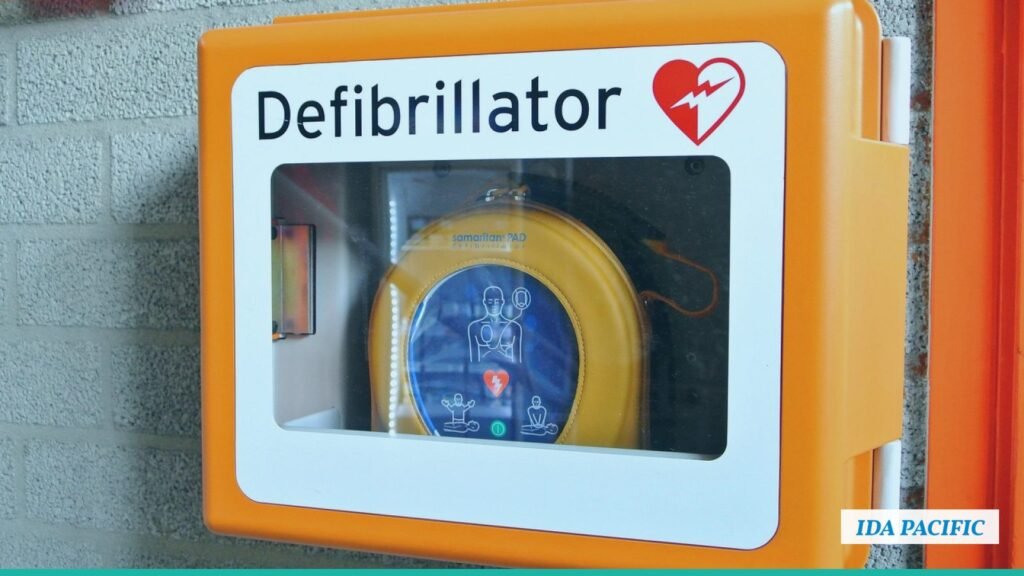
- Choose a sealed box: a hard case with a gasket keeps moisture and insects out better than a soft bag.
- Keep it off the floor: wall mounting avoids flood water and keeps it visible.
- Avoid direct sun: vehicles, boat decks and tin-roofed sheds can get very hot, which degrades adhesives and liquids.
- Use desiccant sachets: they help absorb moisture inside the box.
- Check seals monthly: swollen, stained or soft packaging is a warning sign.
Liquids and anything with an expiry date deserve the closest attention. A saline pod that has been baked in a ute for months may still look fine but should be replaced on schedule. Buying from a supplier whose supply chain is controlled matters here; IDA Pacific’s supply chain is certified for GMP, GDP and ISO 9001, and you can read more on our quality and supply chain standards page.
How to Build a Workplace First Aid Box Around the Core 10
A workplace first aid box should start with the core ten, then add items that match the site’s specific risks. Here is a simple process that works for offices, resorts, schools, construction sites and fishing operations.
- List your likely injuries. Walk the site and talk to staff. Kitchens mean burns and cuts; workshops mean eye injuries and lacerations; boats mean slips and sun exposure.
- Count people and distance. More staff, or longer travel to the nearest clinic, means larger quantities and more than one box.
- Secure the core ten. Confirm every one of the 10 items in first aid box kits is present in sensible quantities.
- Add risk-specific items. Burn dressings, eye wash, a CPR face shield or splints may be appropriate.
- Check local requirements. Some employers and sectors have regulatory expectations; confirm with your relevant authority.
- Assign a responsible person. One named person checks and restocks the box.
- Train staff. Supplies help most when someone knows how to use them.
For clinics and larger facilities, first aid boxes are only one layer. Broader needs such as diagnostic devices are covered in our medical equipment range.
What Not to Rely On in a Basic Box
A common mistake is filling a general first aid box with medicines. In many workplaces, first aiders are not authorised to give medication, and storage in a hot box can affect stability. Medicines are better kept and dispensed through proper channels, such as a clinic or pharmacy that follows recognised lists like the WHO Model Lists of Essential Medicines.
Health facilities sourcing medicines should use a licensed wholesale channel. Approved trade customers can view our essential medicines catalogue separately from first aid stock.
Other items to treat with caution include:
- Loose, unsealed supplies: once a sterile pack is opened, it is no longer sterile.
- Household substitutes: kitchen towels and sticky tape are not wound care products.
- Items nobody is trained to use: advanced devices without training can create false confidence.
Checking and Restocking the 10 Items in First Aid Box Kits
Even a perfect box fails if it is half empty when needed. A short routine keeps your 10 items in first aid box kits ready.
- Monthly: count high-use items (plasters, gloves, gauze) and check seals and expiry dates.
- After every use: the person who used the box records what was taken.
- Quarterly: review the incident log; frequent use of one item may mean a hazard needs fixing.
- Before cyclone season: top up all boxes and add spares to emergency kits.
A simple laminated checklist taped inside the lid listing the core ten, with minimum quantities, makes this fast. Many organisations keep a sealed spare refill pack so a box can be restored the same day.
Cost Factors When Buying First Aid Supplies in Bulk
We do not quote prices here, and wholesale prices are shown only to approved trade customers. However, several factors consistently shape the total cost of first aid supplies:
- Box type: rugged, waterproof cases cost more than soft pouches but last longer on boats and worksites.
- Quality of consumables: better adhesives and sterile packaging cost a little more but reduce waste.
- Order volume: buying refills for several sites at once usually reduces per-unit cost and freight.
- Freight and lead time: shipping to outer islands adds cost; stock held locally shortens waits.
- Waste from expiry: overstocking short-dated items wastes money, so match quantities to real use.
IDA Pacific has supplied the Pacific for 16 years and holds stock in its own Port Vila warehouse for short lead times, supplying 13 countries. That local stock helps buyers order closer to need rather than overstocking.
Adapting First Aid Box Contents for Pacific Settings
The core ten stay the same, but quantities and extras change with the setting:
- Schools: more plasters, gloves and cold packs; child-friendly dressing sizes.
- Resorts and tourism: extra saline for eyes, coral-cut cleaning supplies, foil blankets for boat trips.
- Construction and agriculture: more large dressings, triangular bandages and eye wash.
- Vessels and outer-island posts: larger quantities overall because help is far away; waterproof cases are essential.
- NGO and health programme outreach: compact, sealed kits that travel well and are easy to restock in the field.
For broader public health guidance on emergency readiness, the World Health Organization publishes useful resources.
Conclusion
Getting the 10 items in first aid box kits right covers most everyday injuries and gives you a reliable base to build on. Choose sterile, well-sealed products that hold up in heat and humidity, store boxes carefully, and check them on a simple routine. Explore our first aid kits or the full product catalogue. Ready to order for your pharmacy, clinic or workplace? Open a trade account to view wholesale pricing and stock.
Frequently asked questions
What are the 10 items in a first aid box?
The core ten are adhesive plasters, sterile wound dressings, gauze swabs, conforming and crepe bandages, triangular bandages, medical tape, scissors and tweezers, disposable gloves, antiseptic wipes or saline, and a cold pack with a foil blanket. Together they cover most minor cuts, bleeding, sprains and eye irritation. Add extra items based on your site's specific risks and local requirements.
How often should a first aid box be checked?
Check high-use items and expiry dates at least monthly, and restock after every use. Review incident records quarterly to see whether certain injuries keep happening. In the Pacific, do a full top-up before cyclone season. A checklist inside the lid with minimum quantities for each core item makes these checks quick and consistent for whoever is responsible.
Should medicines be kept in a workplace first aid box?
Generally, a basic workplace first aid box focuses on dressings and equipment rather than medicines. First aiders may not be authorised to give medication, and heat in boxes can affect product stability. Medicines are best managed through clinics or pharmacies. Check your local regulations and health authority guidance for what applies to your workplace or sector.
How does humidity affect first aid supplies?
Humidity and heat can weaken adhesives on plasters and tape, damage paper wrappers that keep dressings sterile, and shorten the useful life of liquids. Use a sealed hard case, keep it off the floor and out of direct sun, add desiccant sachets, and discard any item with stained, swollen or torn packaging.
How many first aid boxes does a site need?
It depends on the number of people, the type of work, the layout and how far the site is from medical help. Larger sites, multiple buildings, vehicles and boats usually need several boxes. Remote locations need larger quantities. Check local workplace health and safety requirements, and make sure every box is easy to reach and clearly marked.